
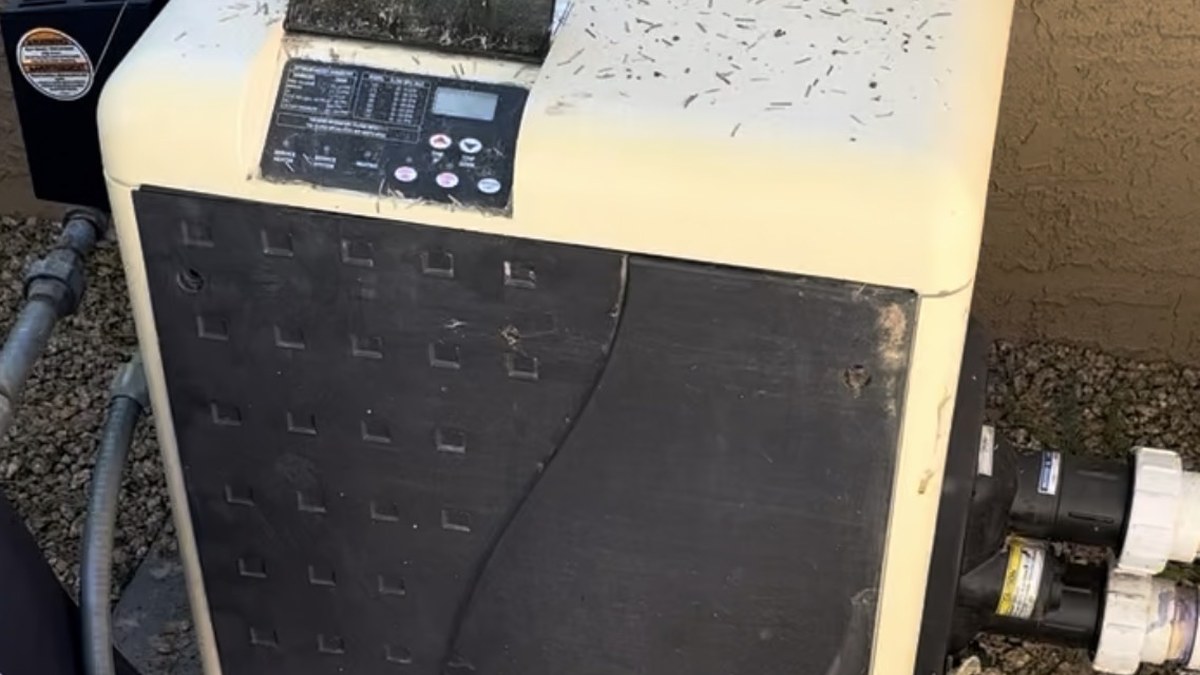


Every November the same thing happens across the East Valley. The water drops into the 60s, somebody turns the pool heater on for the first time since March, and nothing happens. If that is you, this pool heater repair guide walks through the nine problems we see most on Phoenix-area heaters, the fixes you can safely try yourself, and the signs that it is time to call a technician.
Most of these checks take five minutes and need no tools. A few involve gas or electricity, and we say clearly where to stop.
First, a 60-second safety check
- If you smell gas, see black soot on or around the heater, or hear a boom when it lights, turn the heater off at the breaker, close the gas valve and call a pro. Do not keep trying to start it.
- Never open the burner tray or the control board with the power on.
- Anything below that involves wiring, gas lines or the heat exchanger is a job for a licensed technician. Everything else is fair game for a homeowner before you book a pool heater repair.
1. The heater will not turn on at all
The display is dark, there is no click, nothing happens. Nine times out of ten this is power or settings, not a broken heater.
- Check the breaker. Pool heaters sit on their own breaker in the sub-panel by the equipment pad. Reset it once. If it trips again right away, stop. That is a short or chewed wiring, which is common after pack rats move into the cabinet for winter.
- Check the pump. Most heaters only get power while the pump runs. If your timer or automation shut the pump off, the heater is off too.
- Check the mode. The heater must be in Pool or Spa mode, not Standby or Off. On Hayward and Pentair units this is a button on the keypad.
- Check the set point. A heater only fires when the thermostat is set higher than the current water temperature. Set it to 85 for a test and see if it lights.
If none of that wakes it up, the transformer, fuse or control board has likely failed, and that is a pool heater repair for a technician.
2. Low water flow (the most common cause in Arizona)
Every pool heater has a pressure or flow switch that stops it from firing unless enough water is moving through it. Hayward heaters show LO on the display, Raypak shows a water switch message, and Pentair MasterTemp units light the Service System lamp. The heater is fine. It is protecting itself.
Look for the flow problem:
- Dirty filter. This is the number one reason heaters will not fire in the Valley. If the filter pressure gauge reads 8 to 10 psi above its clean reading, clean the cartridge or backwash the sand or DE filter.
- Full baskets. Empty the skimmer and pump baskets. Fall leaf drop fills them fast.
- Half-closed valves. Someone adjusted the valves for a cleaner or a water feature and starved the heater. Make sure water is actually routed through it.
- Variable-speed pump running too low. Energy-saving speeds are often below what the heater needs. Most heaters want a minimum flow in the range of 20 to 40 gallons per minute, so raise the pump speed while heating. Automation systems can do this automatically.
- Air in the system. Bubbles in the pump basket mean a suction leak or low water level. Top the pool up to the middle of the skimmer.
If flow is clearly good and the heater still reads low flow, the pressure switch itself has failed. That is a quick, inexpensive pool heater repair.
3. The heater tries to light but will not stay lit
You hear the blower, a click, maybe a short whoosh, and then it shuts down and tries again. Hayward displays IF (ignition failure). Other brands show an ignition lockout or a Service Heater light.
- Gas supply. Make sure the valve at the heater and the valve at the meter are open. On propane, check the tank level.
- Gas pressure. If a new fire pit, outdoor kitchen or tankless water heater shares the line, the heater may be starved when they run. A technician can test the pressure. Supply problems from the street are a call to the gas company.
- Debris in the burner tray. After a long Arizona summer, spider webs, wasp nests and monsoon dust pack the burner tubes and block the flame. Cleaning them involves gas components, so leave this one to a pro.
- Dirty or failed igniter or flame sensor. Both are common wear items and both are routine pool heater repair parts.
Let the heater attempt to light two or three times. If it locks out, write down the code and call for pool heater repair.
4. The heater runs but the pool never gets warm
The heater fires and stays lit, but the water does not budge. Before you assume a pool heater repair is needed, check the math and the setup.
- Expectations. A 400,000 BTU gas heater on a typical 15,000 to 20,000 gallon East Valley pool raises the water roughly 1 to 2 degrees an hour. A heat pump moves slower, often under 1 degree an hour, and loses output on nights below about 50 degrees, which is exactly when you want it most.
- No cover. Evaporation is the biggest heat loss on an Arizona pool. A solar cover or liquid cover keeps most of the heat you paid for.
- Run time. If the pump schedule ends at 2 p.m., the heater stops at 2 p.m. Extend the schedule while heating.
- Bypass valve. Some installs have a manual bypass that sends water around the heater. Make sure it is routing water through it.
- Spa mode. If the heater is heating the spa to 102 while you expect the pool to warm up, the valves are set to spa.
If the setup is right and the water still will not climb, the thermostat sensor or thermal regulator is reading wrong, or the burners are not all lighting. Time for a technician.
5. The heater turns on and off every few minutes
Short cycling is almost always a flow or temperature-safety problem, not a major pool heater repair.
- Borderline flow. The pressure switch is right on the edge. Clean the filter first, every time.
- High-limit switch. Water inside the heater is getting too hot, usually from low flow. Hayward shows HS. Reversed inlet and outlet plumbing causes this too, and we see it on heaters that were replaced by a handyman.
- Failing temperature sensor. Hayward shows SF (sensor failure). Sensors are cheap and quick to replace.
Fix the flow and most short cycling stops. If it continues with a clean filter and a good pump speed, the sensor, high-limit or bypass needs attention.
6. Water leaking from the heater
First, know what is normal. Gas heaters drip condensation on a cold morning start while the exhaust is still cool. It stops in a few minutes once the heater warms up.
What is not normal is a steady drip while the heater runs, water pooling under the cabinet, or rust-colored water. The usual causes:
- Cracked header or failed gasket where water enters and leaves the heater.
- Corroded heat exchanger. Low pH and high chlorine eat copper. A chlorinator or salt cell installed upstream of the heater without a check valve does the same thing. This is the most expensive pool heater repair there is, and on an older unit it often costs close to a new heater.
- Freeze damage. Rare in Phoenix, but Queen Creek and San Tan Valley see nights below 32 a few times each winter. Freeze-protect mode on your pump prevents it.
Turn the heater off and let the technician confirm where the water is coming from. If the exchanger is gone, skip ahead to the repair-or-replace section.
7. Error codes and the Service Heater light
Error codes are the fastest route to a diagnosis, so read the display before you reset anything. A single power cycle at the breaker (off for 30 seconds) is fine. If the code comes back, write it down for the technician.
Common Hayward Universal H-Series codes, from Hayward’s own troubleshooting guide:
| Code | What it means | Homeowner fix |
|---|---|---|
| LO | Low flow, pressure switch or high-limit open | Clean filter, raise pump speed, open valves |
| IF | Ignition failure | Check gas valves and tank, then call |
| SF | Temperature sensor failure | Technician replaces sensor |
| HS | High water temperature, often reversed plumbing or low flow | Clean filter, then call |
| CE | Communication error between board and keypad | Power cycle once, then call |
| EE | Control board fault | Technician replaces board |
| AO | Blower or venting fault | Clear debris around the vent, then call |
Pentair MasterTemp heaters use two lamps instead. Service System points to flow, pressure or high-limit problems. Service Heater points to ignition, flame sensing or stack sensor problems. Raypak and Jandy spell the fault out in text on the display. The manual for your model is the final word, and most are online.
Hayward pool heater repair and Pentair pool heater repair are the bulk of what we do in winter, and the codes above cover most of the calls.
8. Soot, rust flakes, strange smells or loud noises
These are the symptoms to take seriously.
- Black soot on the top of the heater or the cabinet means incomplete combustion. The causes are gas pressure, blocked air supply or a scaled-up heat exchanger. Shut the heater off.
- Rust flakes in the burner tray or falling out of the exhaust point to a failing heat exchanger.
- Rumbling or booming at startup is delayed ignition. Gas is building up before it lights. Shut the heater off.
- Whistling or screaming is usually a flow or heat-exchanger problem.
Gas heaters in enclosed equipment areas add a carbon monoxide risk. None of these is a do-it-yourself pool heater repair.
9. Arizona wildlife, dust and sun
Our climate adds a few pool heater repair causes you will not find in a national guide.
- Pack rats and mice nest inside warm heater cabinets from November on and chew wiring harnesses and gas valve leads. Look for droppings and shredded material when you open the access panel.
- Wasps and spiders block burner orifices and pilot assemblies over the summer.
- Monsoon dust packs the burner tray on gas heaters and coats the coil on heat pumps. A gentle rinse of the heat pump coil with a garden hose, power off, makes a real difference.
- Sun bakes keypads and membrane switches until buttons stop responding. A shade structure over the equipment pad adds years to a control panel.
Keep the area around the heater clear, keep the cabinet closed, and have it opened and inspected once a year.
Should you repair or replace the pool heater?
How long should a pool heater last? In Arizona, gas heaters commonly run 8 to 12 years and heat pumps 10 to 15, with water chemistry and maintenance making the difference between the low and high end.
Replace rather than book another pool heater repair when:
- The heat exchanger has failed on a heater more than 8 years old.
- The repair quote is more than about half the cost of a new heater.
- This is the second or third repair in two seasons.
- Parts are discontinued, which is common on older millivolt (standing pilot) heaters.
- You are already upgrading to a variable-speed pump or automation and want everything on one system.
Modern gas heaters are more efficient than units from the 2000s, and a heat pump costs far less per month to run if you heat for long stretches. Our pool heater installation page covers gas, heat pump and solar options and what each one is good for in the East Valley.
How much does pool heater repair cost?
Pool heater repair cost depends almost entirely on the part. Industry-wide, a diagnostic visit is the smallest line item. Pressure switches, sensors, igniters and thermostats are inexpensive parts with quick labor. Gas valves, blowers and control boards cost more. Heat exchangers are the top of the range and often push the decision toward replacement.
We give a written quote before any work starts, and the diagnostic visit is applied to the repair if you go ahead.
Pool heater maintenance that prevents most of these calls
Most of the pool heater repair calls we run in December could have been avoided in October. A short pool heater maintenance routine:
- Book a fall tune-up before the first cold night, usually mid-October in the Valley. The technician cleans the burner tray, checks gas pressure, tests the safeties and fires it up.
- Clean the filter on schedule, monthly during swim season and whenever the gauge climbs 8 to 10 psi.
- Keep chemistry in range. pH 7.4 to 7.6, alkalinity 80 to 120 ppm, calcium hardness 200 to 400 ppm. Balanced water is the single best protection for the heat exchanger.
- Put the chlorinator or salt cell after the heater with a check valve between them.
- Run the heater for 10 minutes once a month in the off-season so you find problems in September, not on Thanksgiving.
- Keep the cabinet clear and closed, trim plants back, and rinse heat pump coils.
- Use a cover. It cuts heat loss more than any other single change.
Our weekly pool cleaning service includes filter cleaning and chemistry balancing, which is why our weekly customers rarely need a heater call.
Pool heater repair across the East Valley
Radiance Pools repairs gas heaters and heat pumps across Phoenix, Ahwatukee, Tempe, Chandler, Gilbert, Mesa, Queen Creek and San Tan Valley. We are the local specialists for Pentair and Hayward equipment and service most other major brands. Every visit comes with a photo report so you can see what we found and what we fixed.
If your heater is showing a code, short cycling or just not heating, call (480) 442-1909 or request a free estimate. See everything we fix on our pool repair services page.
Pool heater repair FAQ
Why is my pool heater not working?
The three most common reasons are no power or the wrong mode, low water flow from a dirty filter, and an ignition failure from a closed gas valve or a dirty burner. Check the breaker, the mode, the set point and the filter pressure before you call for pool heater repair.
What does LO mean on a Hayward pool heater?
LO means the heater is not seeing enough water flow, or a safety switch in the same circuit has opened. Clean the filter, empty the baskets, open any half-closed valves and raise a variable-speed pump to a higher speed. If LO stays on with good flow, the pressure switch needs replacing.
How long should a pool heater last in Arizona?
Gas pool heaters typically last 8 to 12 years here and heat pumps 10 to 15. Balanced water chemistry and a yearly tune-up push a heater toward the long end of that range. A corroded heat exchanger is what usually ends a heater’s life early.
How much does pool heater repair cost?
It depends on the part. Pressure switches, sensors and igniters are inexpensive, quick repairs. Control boards and gas valves cost more, and a heat exchanger is the most expensive repair, often close to the price of a new heater. Radiance Pools gives a written quote before any work begins.
Can I run my pool heater with a dirty filter?
No. A dirty filter starves the heater of flow, which trips the pressure switch and, if the heater does fire, overheats the exchanger and shortens its life. Clean the filter whenever the gauge reads 8 to 10 psi above its clean baseline.
Is it worth repairing a 10-year-old pool heater?
It is worth repairing if the fix is a small part like a sensor, switch or igniter. If the heat exchanger has failed, or the quote is more than about half the cost of a new heater, replacement is the better investment.
Why is water dripping from my pool heater?
A little condensation on a cold-morning start is normal for a gas heater and stops within minutes. A steady drip while the heater runs, or rust-colored water, points to a cracked header, a failed gasket or a corroded heat exchanger. Turn the heater off and have it inspected.